Watercolour for Beginners: The Materials You Actually Need
 Nicola Blakemore

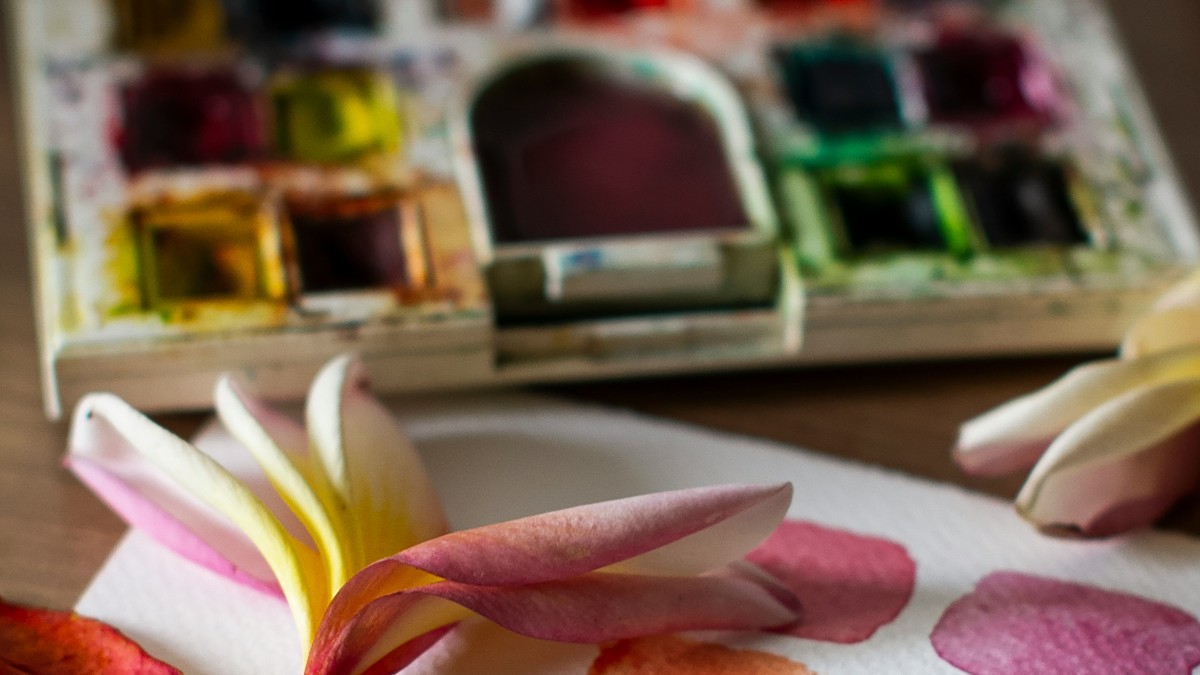
A simple guide to the watercolour materials beginners actually need, from paints and paper to brushes and workspace basics, without buying a roomful of supplies
If you are just starting with watercolour, it is very easy to think you need a room full of equipment before you can begin. There are so many paints, brushes, papers and clever little tools available that it can all feel rather confusing.
The good news is that you really do not need very much to get started.
The essentials
Watercolour paint
A small selection of good-quality paint is more useful than a huge box of colours that you hardly know how to use. Start with a few colours that give you a good range of mixes. You will learn much more by mixing your own greens, purples and oranges than by buying every colour already made.
Student-quality paint is perfectly fine when you are beginning. The most important thing is to use it, rather than keeping it in the box waiting for the right moment.
Paper
Paper makes a bigger difference than many beginners expect. Very thin paper buckles and can make the whole process feel difficult. Choose watercolour paper rather than ordinary drawing paper, and look for a weight that feels sturdy enough to take water.
You do not need the most expensive paper in the shop. You just need paper designed for watercolour, so that it gives you a fair chance.
Brushes
You only need a few brushes. A medium round brush will do a surprising amount, and a larger brush is useful for washes. A smaller brush can be added later for details.
Do not worry about having a brush for every possible job. It is better to become familiar with two or three brushes than to spend your time choosing between twenty.
A palette and two water pots
You need somewhere to mix your colours. This can be a proper palette or a white plate that is easy to clean. Two water pots are helpful, one for washing your brush and one for keeping cleaner water for your mixes.
A piece of kitchen towel or an old cloth is useful too. Watercolour is very much about managing water, and being able to lift a little from your brush is part of the process.
Pencil and a light touch
A soft pencil is useful for a simple drawing. Keep the marks light. The drawing is there to help you place the main shapes, not to become a finished pencil illustration underneath the paint.
What you do not need yet
You do not need every colour, a complicated travel easel, expensive brushes or a studio full of equipment. You certainly do not need to wait until everything is perfect.
Start with a small, manageable collection and spend your time learning what the paint and water are doing. That is where the real progress comes from.
I have put the fuller list of materials, paints, paper and workspace ideas into my Watercolour Starter Toolkit, so you can use it as a simple reference while you get started.
Most importantly, give yourself permission to make some unattractive paintings. We all do. The paint has to go on the paper before you can learn what to do with it.
Keep safe, keep painting, love Nicola